A model pretrained on one physiological signal should not have to be rebuilt for the next cohort, the next device, or the next clinical question. Two lines of work test how far that holds — one starting from polysomnography, one from wrist accelerometry.
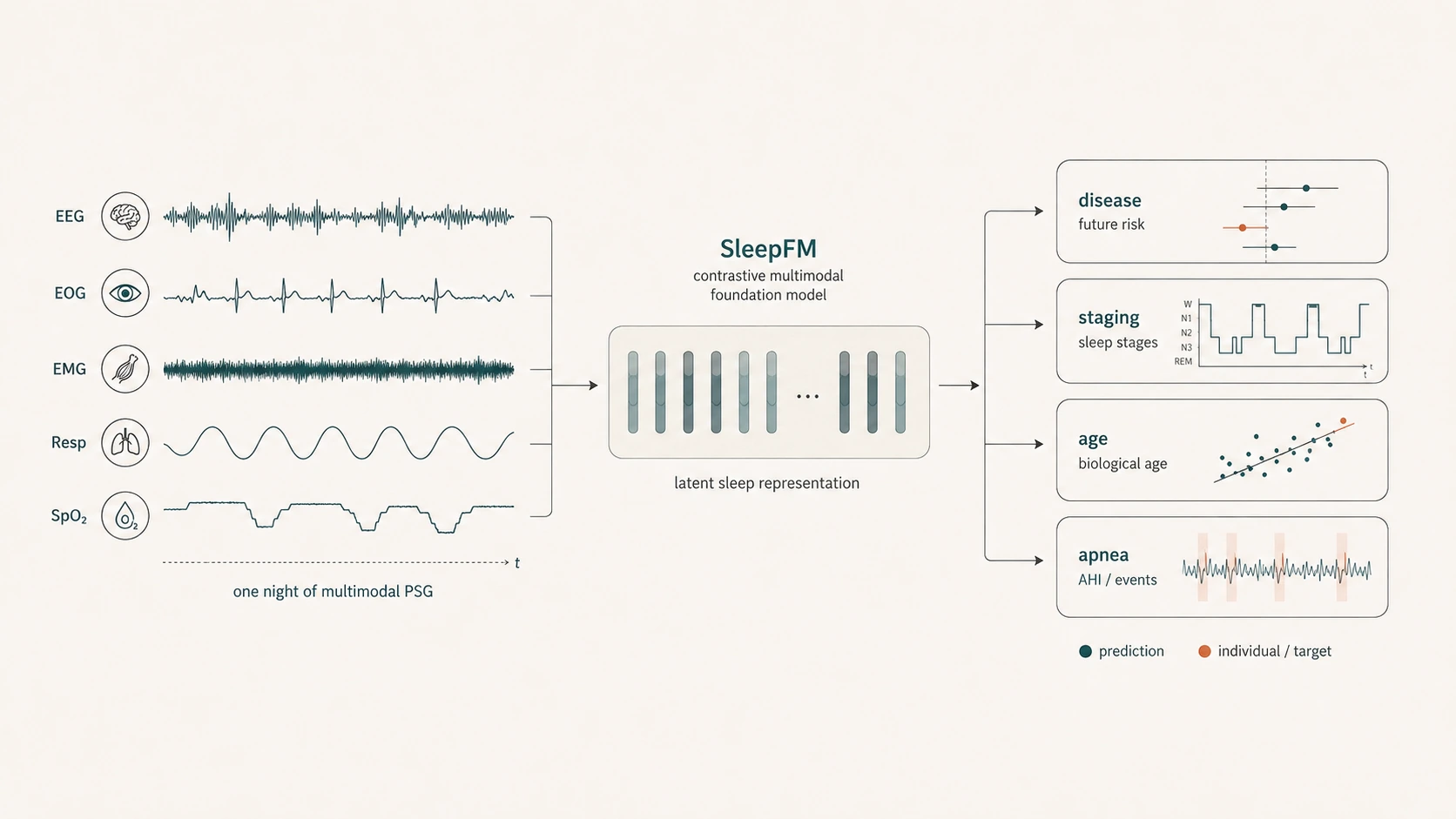
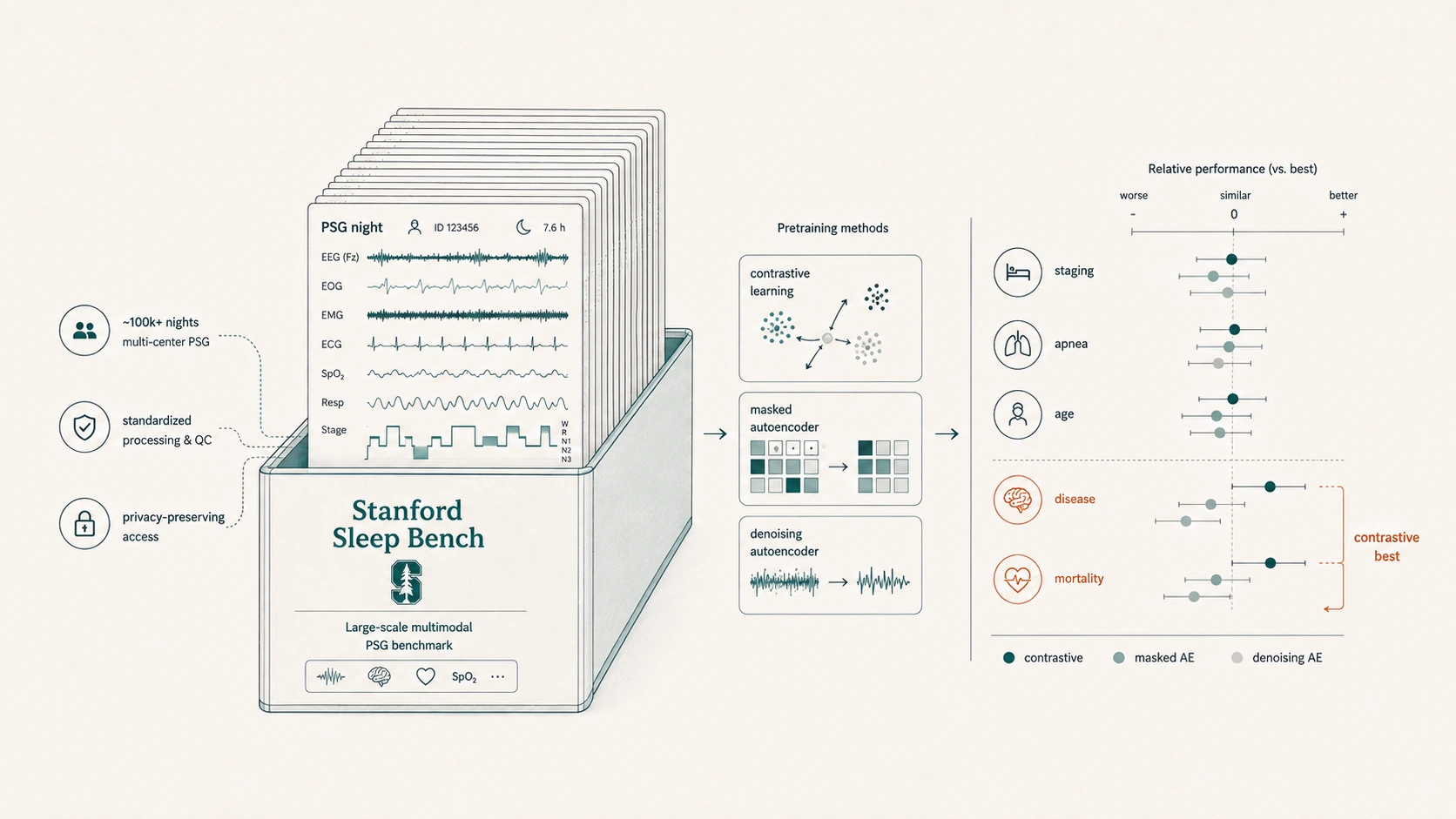
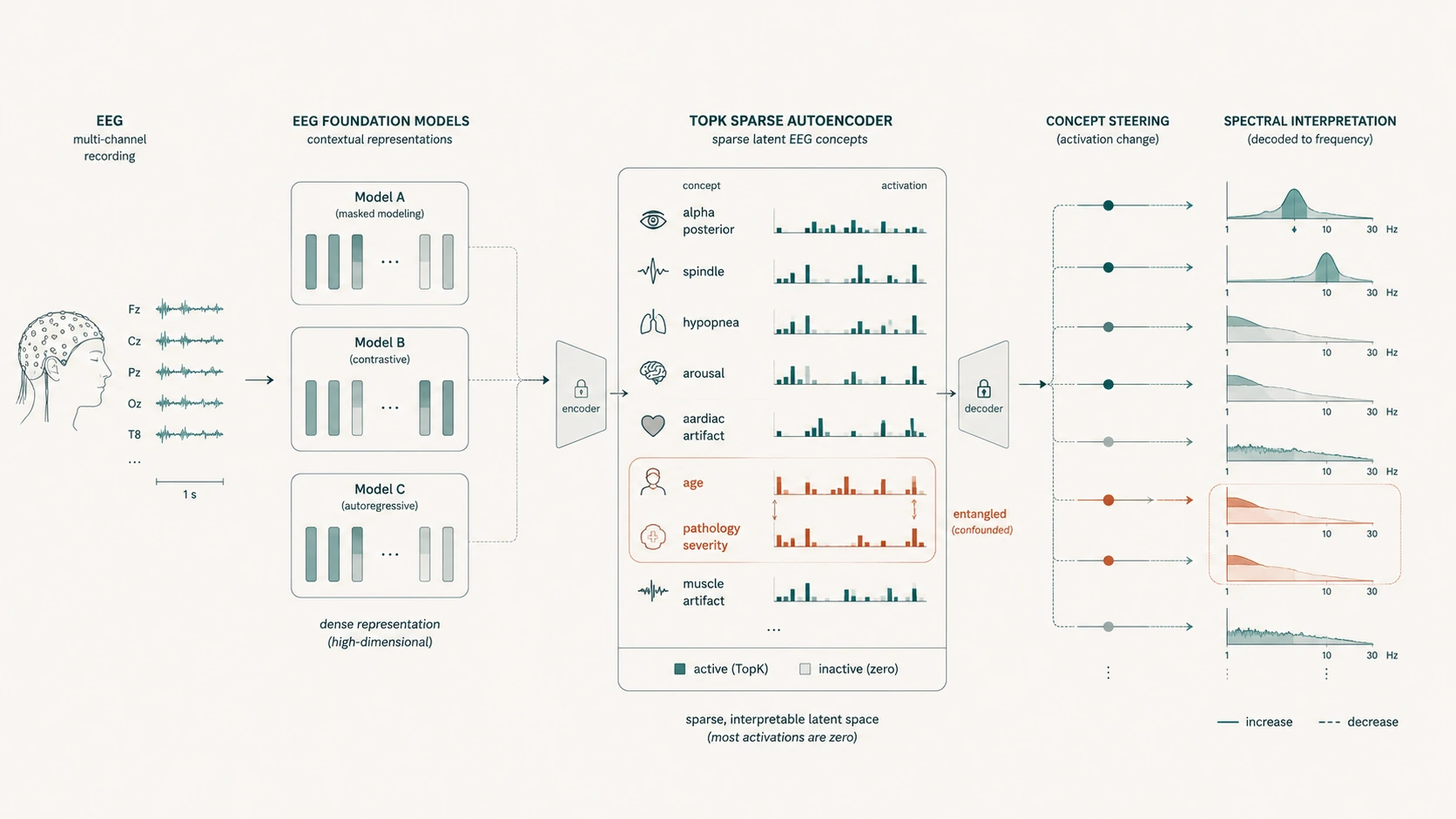
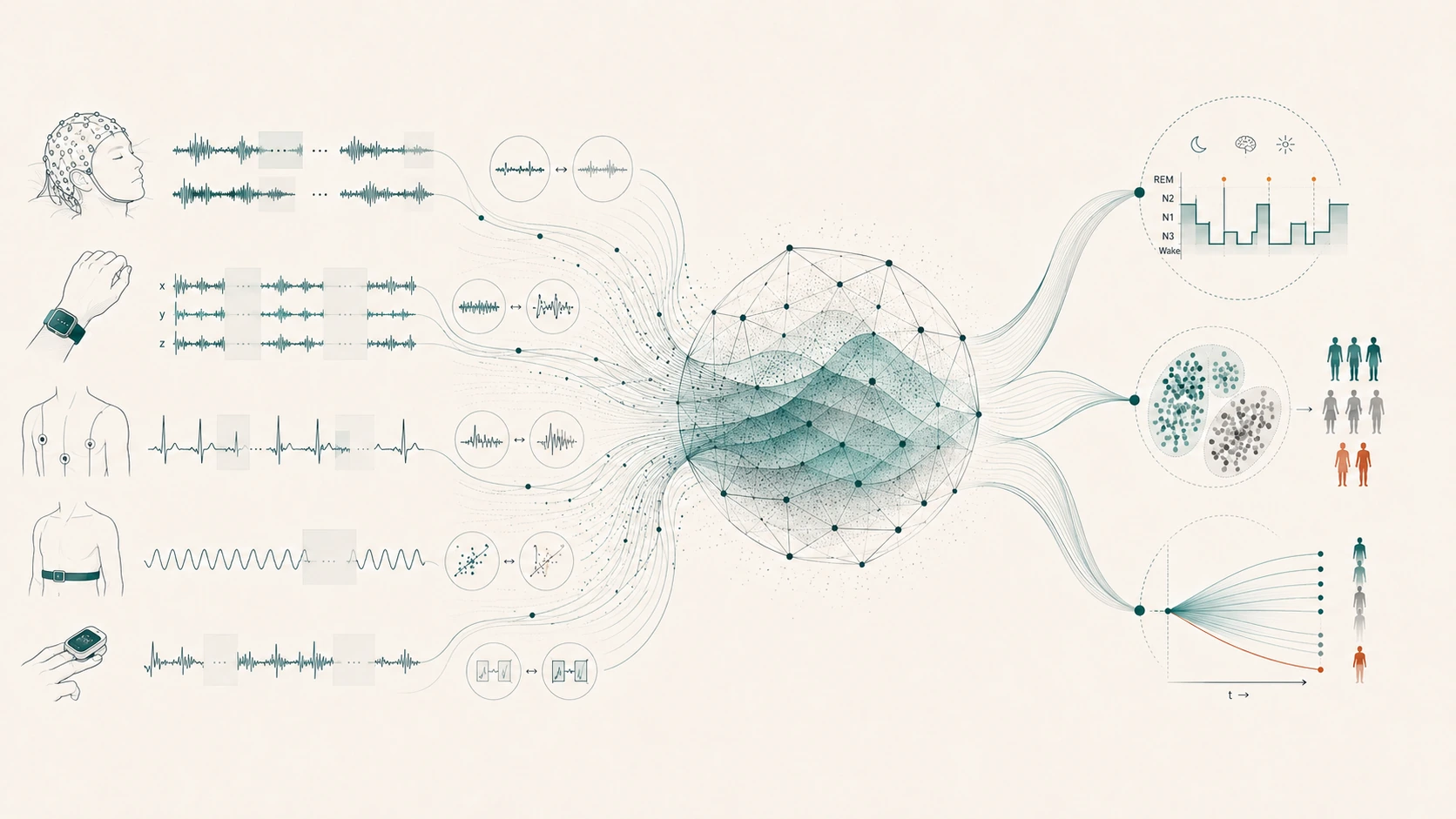
Foundation models for polysomnography. A multimodal sleep foundation model for disease prediction is the model itself; Stanford Sleep Bench is the benchmark comparing the pretraining methods behind it; and mechanistic interpretability via sparse autoencoders asks what such a model has actually learned. Representations pretrained on sleep also transfer to non-sleep biosignal tasks.
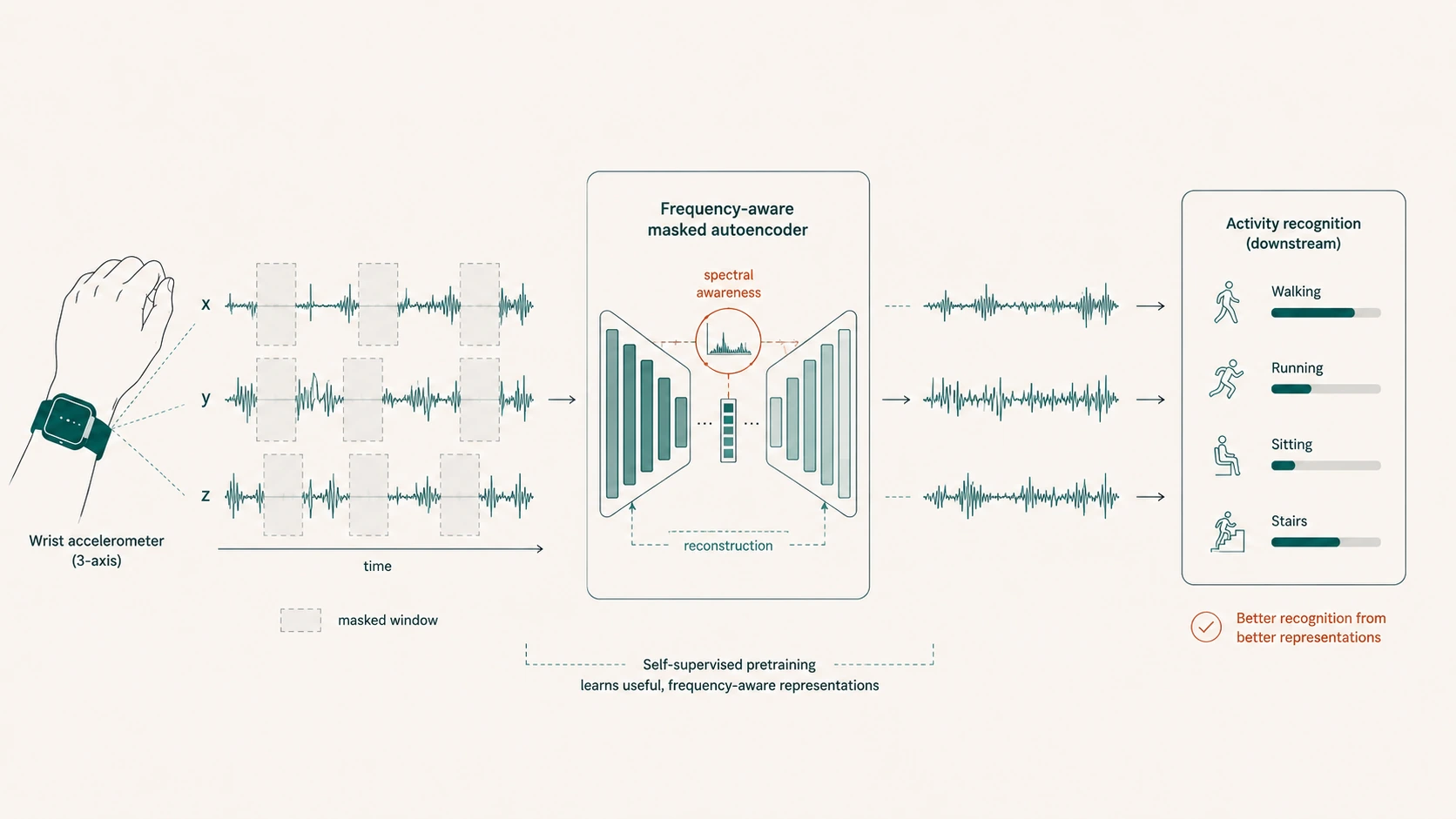
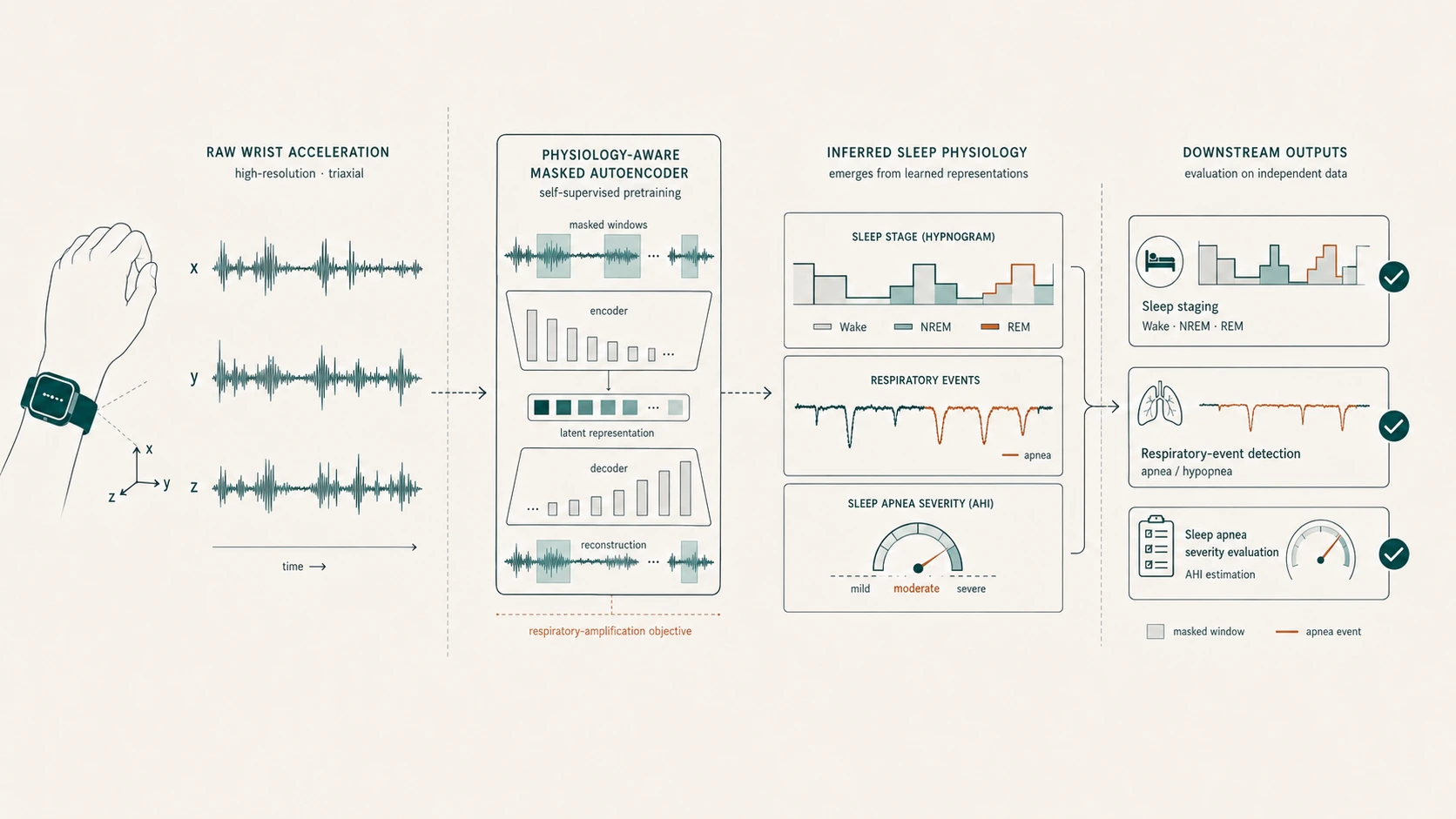
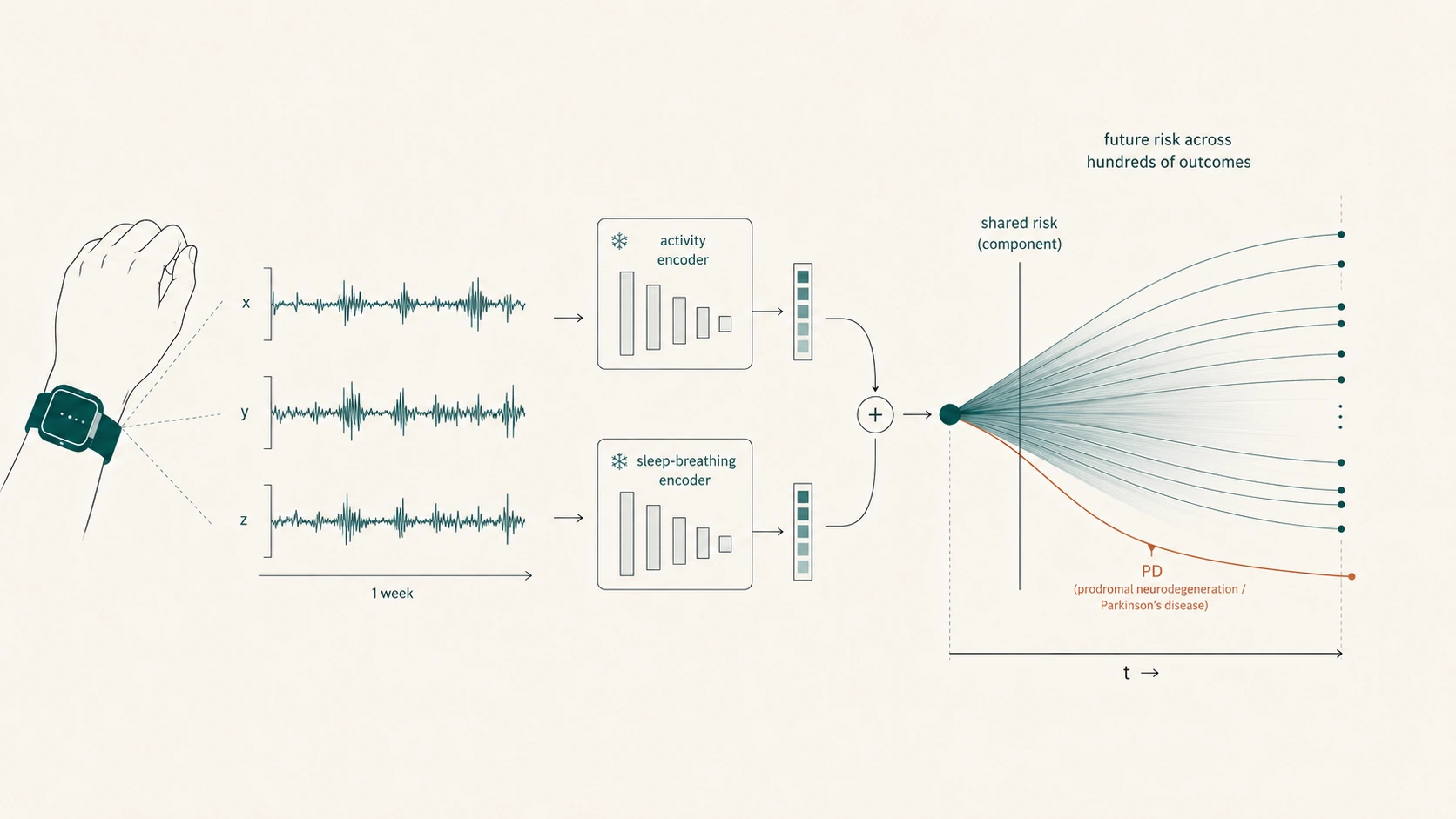
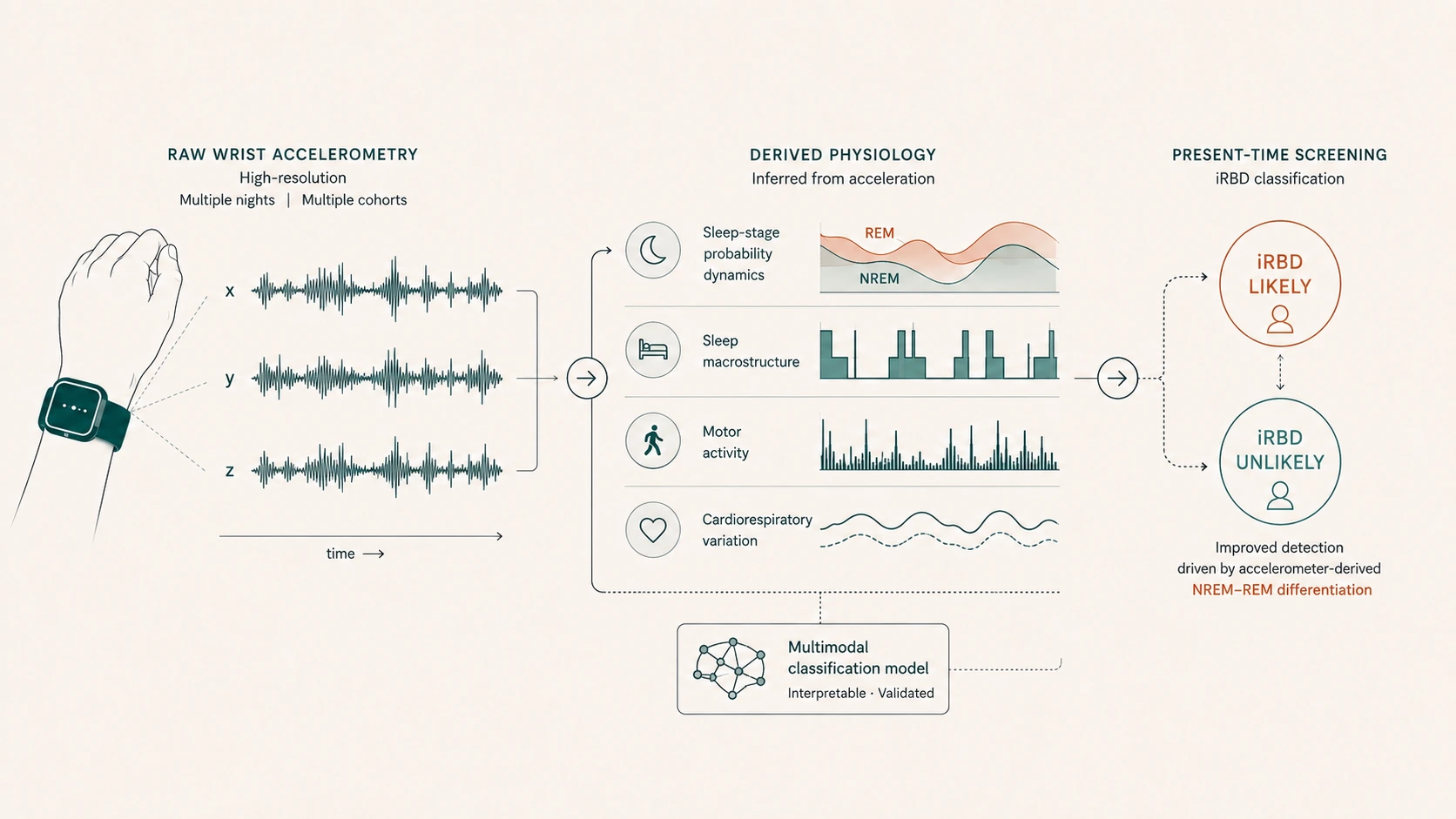
Foundation models for wrist accelerometry. The same question applied to a far cheaper sensor: frequency-aware masked autoencoders for activity recognition, physiology-aware pretraining that recovers pulse- and respiration-related motion for sleep staging and apnea evaluation, and paired models predicting future disease risk from one week of wrist movement in 97,696 UK Biobank participants — see also Wearables for scalable health assessment.