Opportunities
Student projects and supervision in computational signal-to-health modeling at DTU Health Tech.
What I supervise
PhD projects, MSc theses, BSc theses, and special courses at DTU, across all three research themes. Past supervised projects are listed on the About page.
A background in signal processing, machine learning, or biomedical engineering is a good fit. Comfort working with real, messy physiological time series matters more than prior knowledge of sleep medicine — that part is learnable during the project.
Open student projects
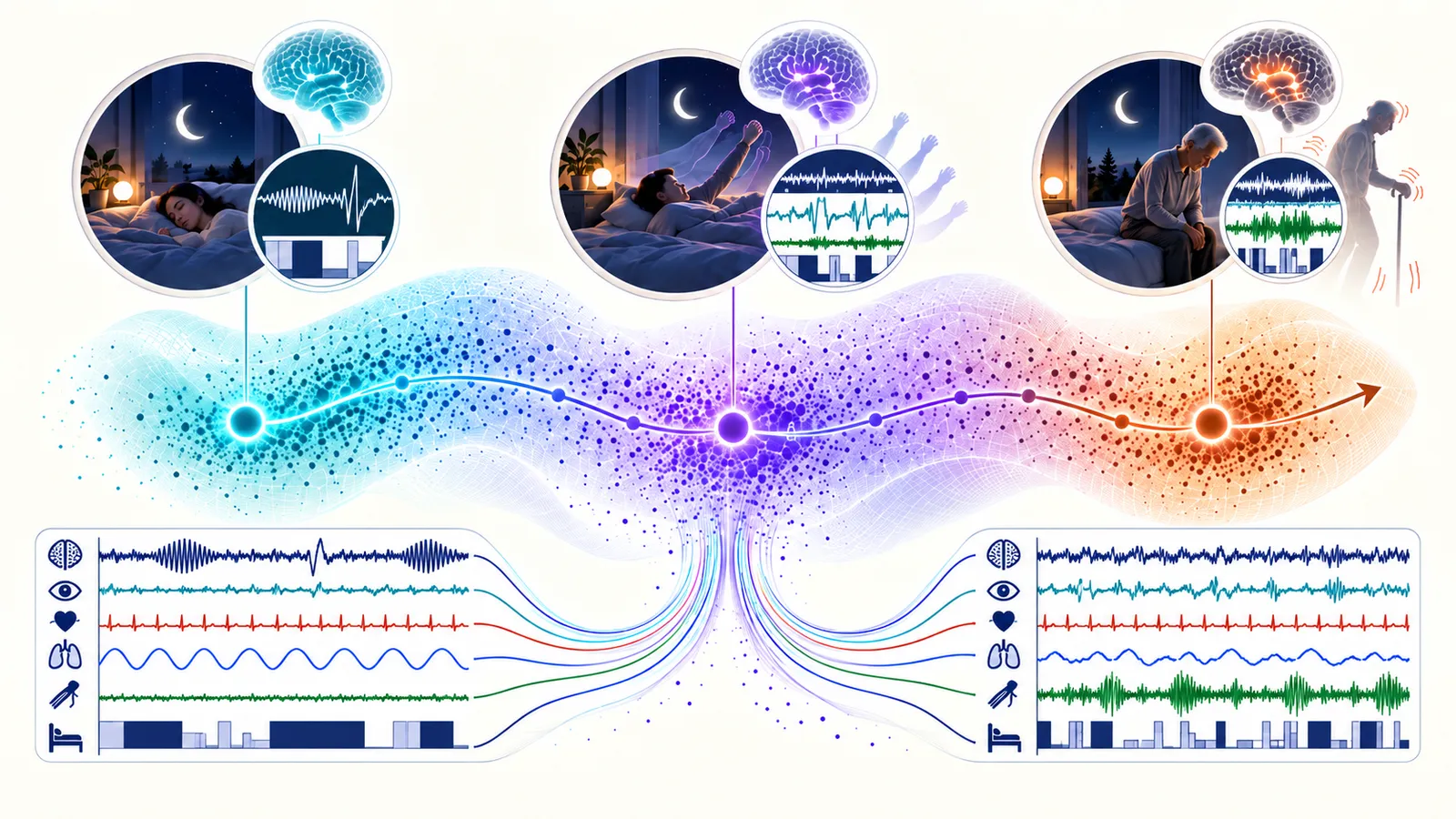
Continuous Sleep Phenotypes of Neurodegenerative Disease
Use learned representations of polysomnography to describe neurodegeneration as a continuum — testing whether prodromal disease states sit between healthy and established disease, and whether sleep phenotypes track severity and progression.
Full description
Neurodegenerative diseases are associated with widespread changes in sleep physiology, including alterations in brain activity, autonomic regulation, motor activity, and sleep organization. These abnormalities may develop gradually and may therefore be better represented as continuous physiological phenotypes than as discrete diagnostic categories.
In this project, the student will investigate whether learned representations of polysomnography can reveal continuous patterns associated with neurodegeneration and disease progression. The project will build on existing pretrained sleep models and clinical sleep cohorts containing healthy individuals and participants at different stages of neurological disease. Relevant examples include isolated REM sleep behavior disorder, Parkinson’s disease, and related synucleinopathies, although the exact disease groups and datasets can be adapted according to data availability and the focus of the project.
The student will explore how individuals are organized within the learned sleep representation space and whether clinically meaningful directions or trajectories can be identified. A particular interest is whether individuals with prodromal or intermediate disease states occupy positions between healthy and established disease phenotypes, and whether derived sleep phenotypes relate to disease severity, progression, or other clinical measures.
The project provides hands-on experience with clinical sleep data, foundation-model representations, dimensionality reduction and representation analysis, statistical or machine-learning modelling, and biomarker development for neurodegenerative disease.
Required qualifications
The student should have strong Python and machine-learning skills and be comfortable with statistical modelling. Experience with biomedical signal processing, representation learning, or clinical data analysis is an advantage.
Supervisors
- Andreas Brink-Kjær — Assistant Professor, DTU Health Tech
- Umaer Hanif — Postdoc, Rigshospitalet
- Poul Jennum — Chief Physician, Rigshospitalet
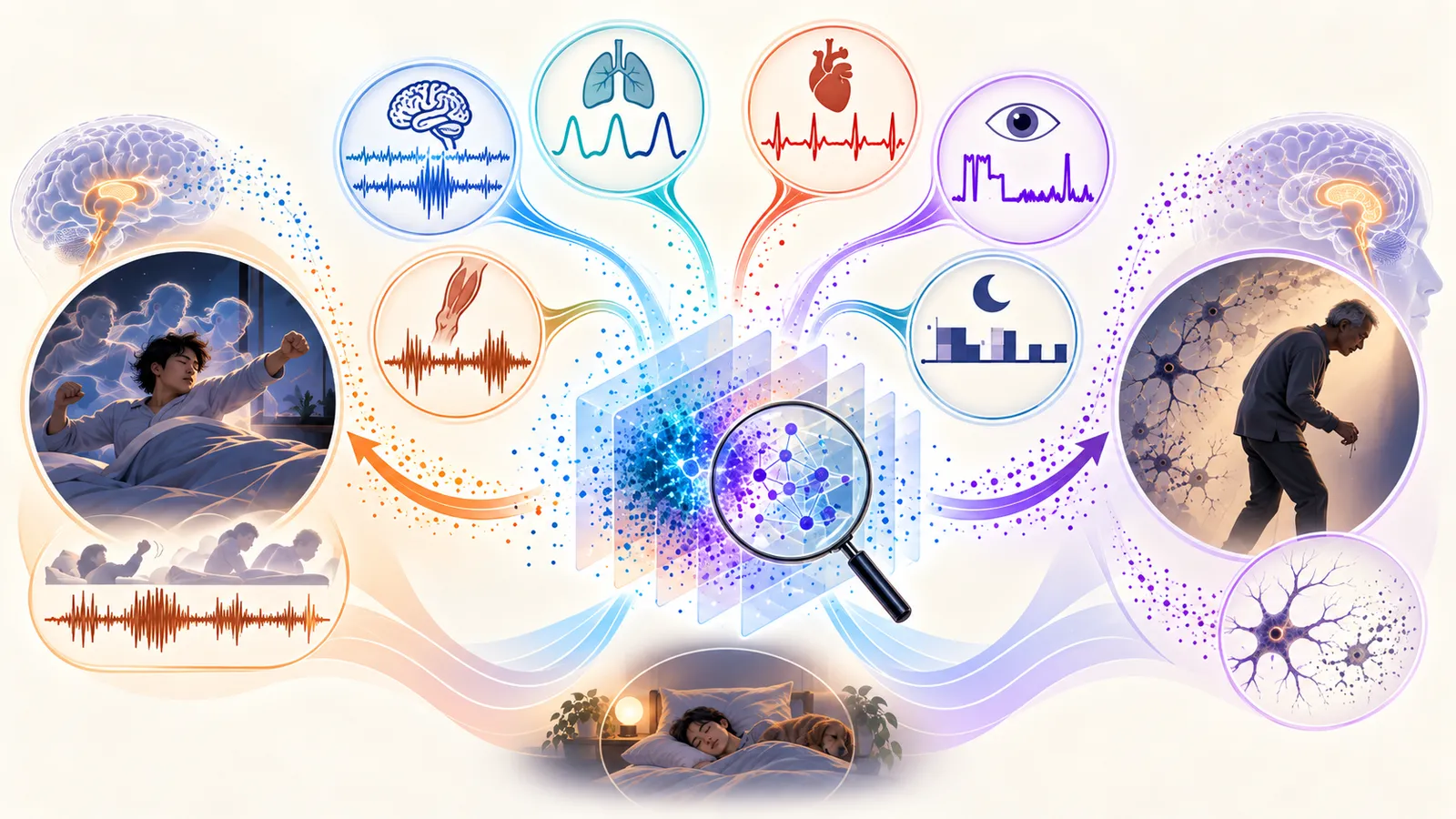
Explaining Neurodegenerative Disease Predictions Through Physiological Concepts from Sleep
Connect iRBD and Parkinson's disease predictions from a pretrained sleep foundation model to interpretable physiological concepts — such as REM sleep without atonia, arousals, and autonomic measures — and test how much each concept drives the prediction.
Full description
Deep-learning models can identify signatures of isolated REM sleep behavior disorder (iRBD) and Parkinson’s disease from polysomnography, but high predictive performance does not by itself explain what physiological abnormalities the model has learned. In this project, the student will connect disease predictions from a pretrained sleep foundation model to interpretable concepts in sleep physiology.
The project will use existing clinical polysomnography datasets available through collaborations with the Danish Center for Sleep Medicine at Rigshospitalet and other clinical partners. A focused concept set will be defined using established annotations or automated detectors, for example REM sleep without atonia, arousal burden, sleep instability, EEG microstructure, autonomic measures, respiratory disturbance, and eye-movement characteristics.
The student will first test which physiological concepts can be recovered from the learned representation using simple probes. The next step will assess which concepts are associated with iRBD or Parkinson’s disease and with the model’s disease score. Finally, representation-intervention methods such as concept removal or suppression can be used to test how much individual concepts contribute to the prediction.
The project provides hands-on experience with clinical sleep data, explainable machine learning, physiological signal analysis, and modern methods for interpreting foundation-model representations.
Required qualifications
The student should have a strong background in Python and machine learning, with interest in biomedical signal processing and explainable AI. Previous experience with deep learning, statistics, or physiological time series is an advantage.
Supervisors
- Andreas Brink-Kjær — Assistant Professor, DTU Health Tech
- Umaer Hanif — Postdoc, Rigshospitalet
- Poul Jennum — Chief Physician, Rigshospitalet
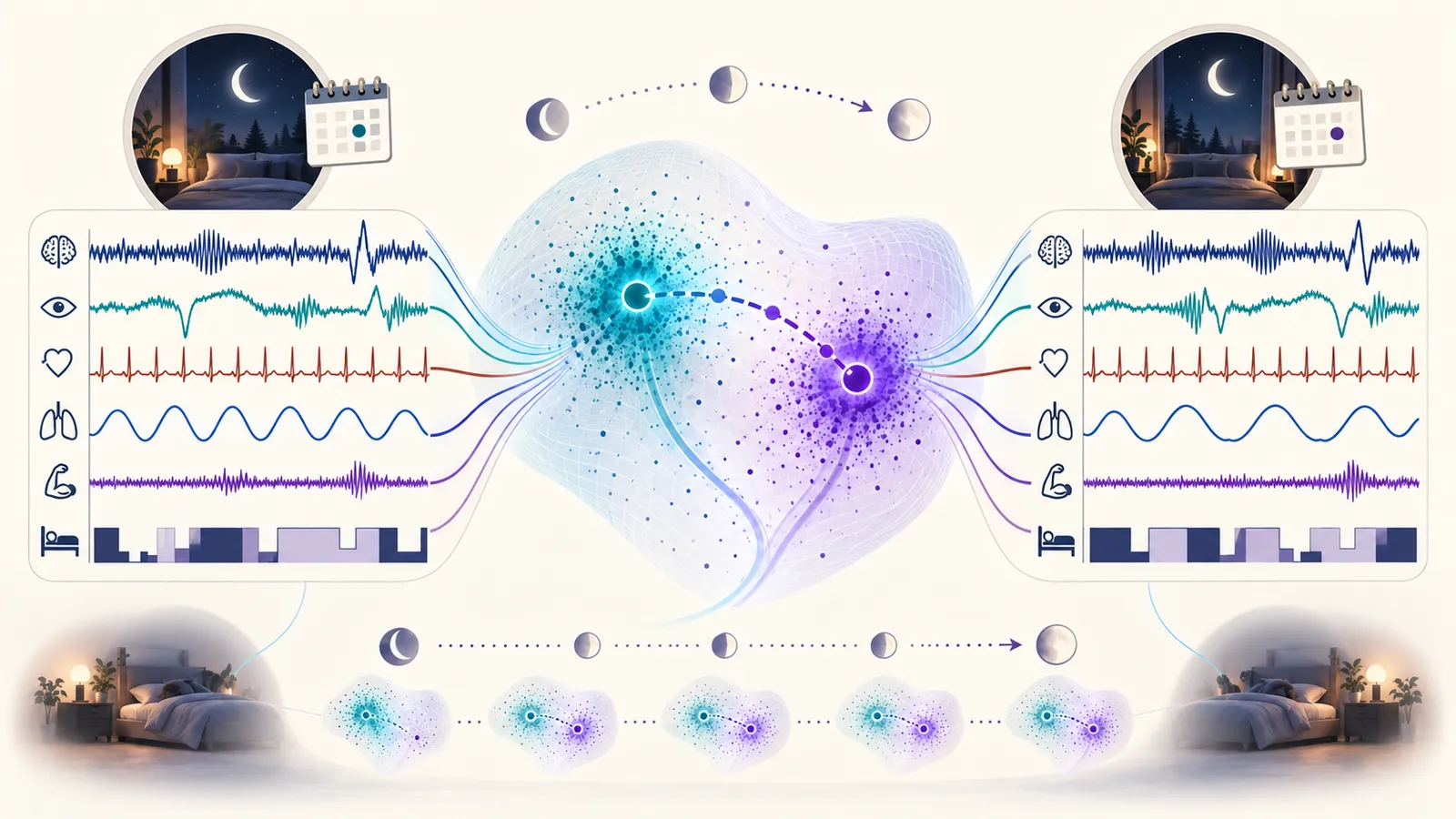
Longitudinal Sleep Representations for Tracking Biological Aging and Disease Progression
Test whether changes in an individual's learned sleep representation across repeated recordings act as biomarkers of biological aging and disease progression, using cohorts such as SHHS and MrOS.
DTU Health Tech, with the possibility of a research stay at the Medical University of Innsbruck.
Full description
Sleep changes with age, disease, and general health, but conventional sleep measures capture only a small part of the physiological information contained in a full-night recording. Modern foundation models and probabilistic sleep representations provide compact descriptions of sleep physiology that may be sensitive to changes in health long before these changes are apparent from standard sleep macrostructure.
In this project, the student will investigate whether longitudinal changes in learned sleep representations can be used as biomarkers of biological aging and disease progression. The project will use cohorts with repeated sleep recordings and longitudinal health information. Possible examples include large public cohorts such as SHHS and MrOS, as well as clinical cohorts with repeated polysomnography or detailed follow-up information.
A central question will be whether a change in an individual’s sleep representation corresponds to a meaningful change in health. The student will test whether movement through representation space is associated with worsening disease status, development of new conditions, functional decline, or accelerated biological aging. Different representations can be compared, including foundation-model embeddings, hypnodensity-based representations, and conventional sleep measures.
The project provides hands-on experience with longitudinal biomedical data, representation learning, survival or longitudinal modelling, biological aging, and the development of digital biomarkers from sleep.
Required qualifications
The student should have a background in biomedical engineering, computer science, data science, or a related discipline, with experience in Python programming and basic machine learning and statistics.
Supervisors
- Andreas Brink-Kjær — Assistant Professor, DTU Health Tech
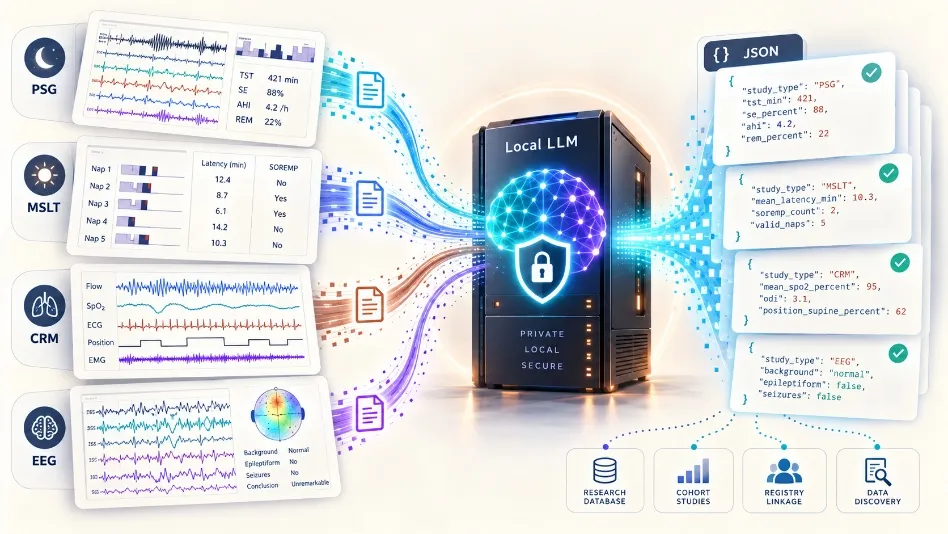
Privacy-Preserving Large Language Models for Clinical Neurophysiology
Build a locally deployed LLM system that turns more than 200,000 neurophysiology reports — polysomnography, MSLT, cardiorespiratory monitoring, and EEG — into structured, research-ready data without patient information leaving approved infrastructure.
Full description
Clinical neurophysiology produces large numbers of reports containing valuable measurements, observations, and diagnostic conclusions, but much of this information is stored in heterogeneous free-text or semi-structured documents. Previous work at the Danish Center for Sleep Medicine developed a locally deployed Large Language Model (LLM) pipeline for converting historical polysomnography reports into structured data.
In this project, the student will extend this approach toward a more general system for structuring more than 200,000 neurophysiology reports across multiple examination types, potentially including polysomnography, Multiple Sleep Latency Tests (MSLT), cardiorespiratory sleep monitoring (CRM), and routine EEG. A possible workflow is to first identify the report type and subsequently route the document to an appropriate report-specific extraction schema, producing standardized JSON data that can be used for research and linked to physiological recordings or other clinical information.
Because the reports contain sensitive patient information, the complete workflow must operate locally on the approved computing infrastructure rather than using external LLM APIs. The student will therefore work with locally deployable open-weight language models and investigate suitable approaches including modular LLM workflows, type-specific schemas, constrained structured generation, fine-tuning or parameter-efficient adaptation, and human-in-the-loop validation. Clinical experts will contribute expertise to define relevant variables and create manually annotated report-to-JSON examples for development and evaluation, building on the annotation methodology established in the previous project.
Required qualifications
The student should have a background in biomedical engineering, computer science, data science, or a related discipline, with strong Python programming skills and experience with machine learning. The student should also have at least some Danish reading skills. Experience with LLMs, natural language processing, or local model deployment is an advantage but not required.
Supervisors
- Andreas Brink-Kjær — Assistant Professor, DTU Health Tech
- Umaer Hanif — Postdoc, Rigshospitalet
- Poul Jennum — Chief Physician, Rigshospitalet
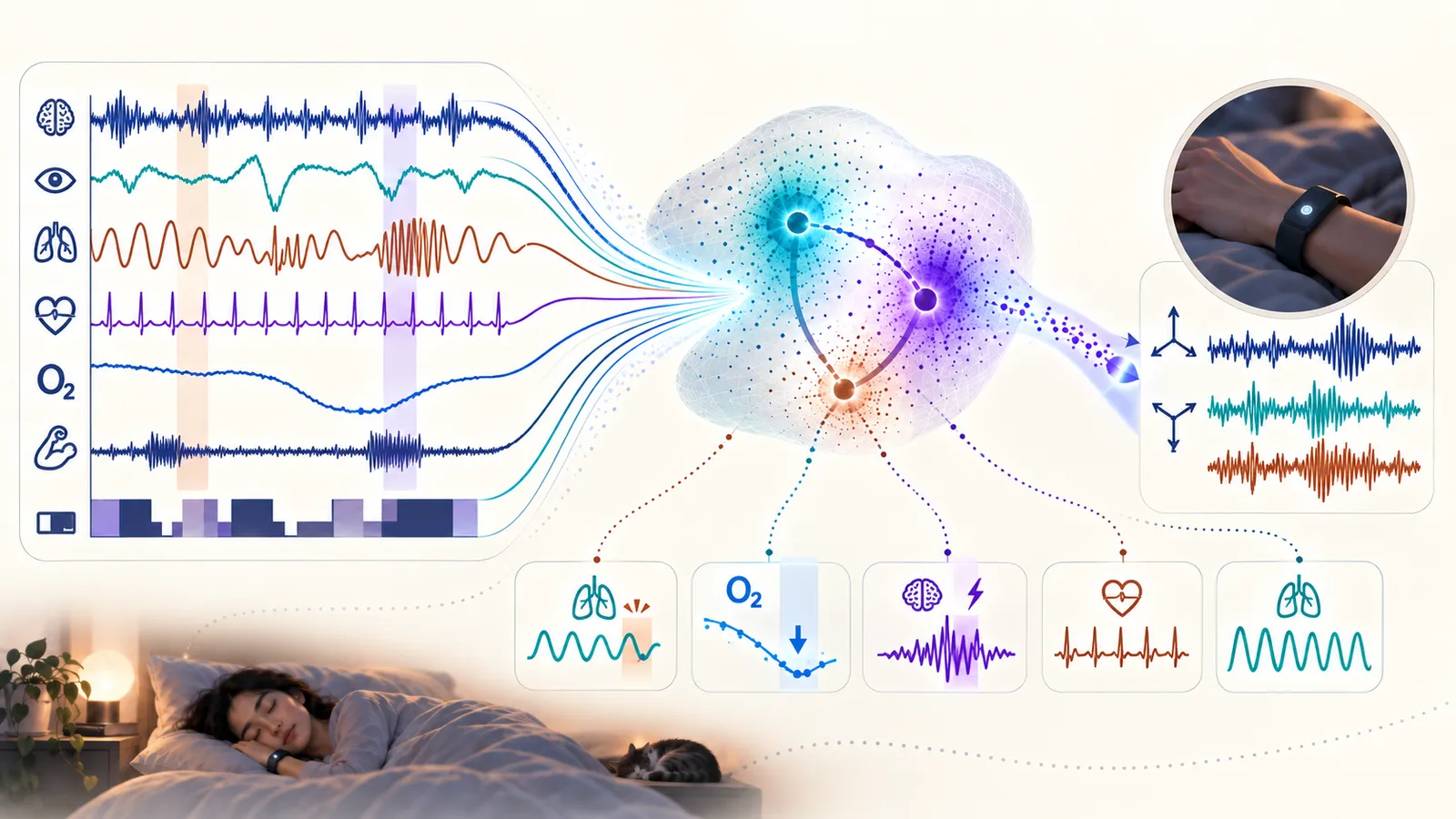
Transferring Physiological Information from Polysomnography to Wrist Accelerometry
Use synchronized polysomnography as privileged supervision to make pretrained wrist-accelerometry representations more physiologically informative, and evaluate them on clinically meaningful measures such as respiratory events, oxygenation, and arousal burden.
Full description
Polysomnography provides detailed information about brain activity, respiration, cardiac physiology, and movement, but it is expensive and difficult to collect at scale. Wrist accelerometry is far more scalable but contains only indirect traces of this physiology. In this project, the student will investigate whether synchronized polysomnography can be used as privileged supervision to make pretrained wrist representations more physiologically informative.
The project will use datasets containing synchronized polysomnography and wearable recordings, with open resources such as DREAMT providing one possible starting point. Existing pretrained models for polysomnography and wrist accelerometry can be used to investigate how physiological information represented in polysomnography can be transferred to, aligned with, or distilled into wearable representations.
The project will evaluate clinically meaningful downstream measures derived from the polysomnography. These can include respiratory events, apnea-hypopnea indices, oxygenation, arousal burden, and selected outputs from established event detectors. The key comparison will be between the original wrist representation, the PSG-supervised wrist representation, and the representation obtained directly from polysomnography.
The project provides hands-on experience with multimodal physiological data, representation learning, knowledge transfer, sleep-signal analysis, and clinically motivated evaluation of wearable biomarkers.
Required qualifications
The student should have strong Python programming skills and prior experience with machine learning or deep learning. A background in biomedical signal processing is highly desirable. The project is suitable for a student interested in representation learning and multimodal physiological data.
Supervisors
- Andreas Brink-Kjær — Assistant Professor, DTU Health Tech
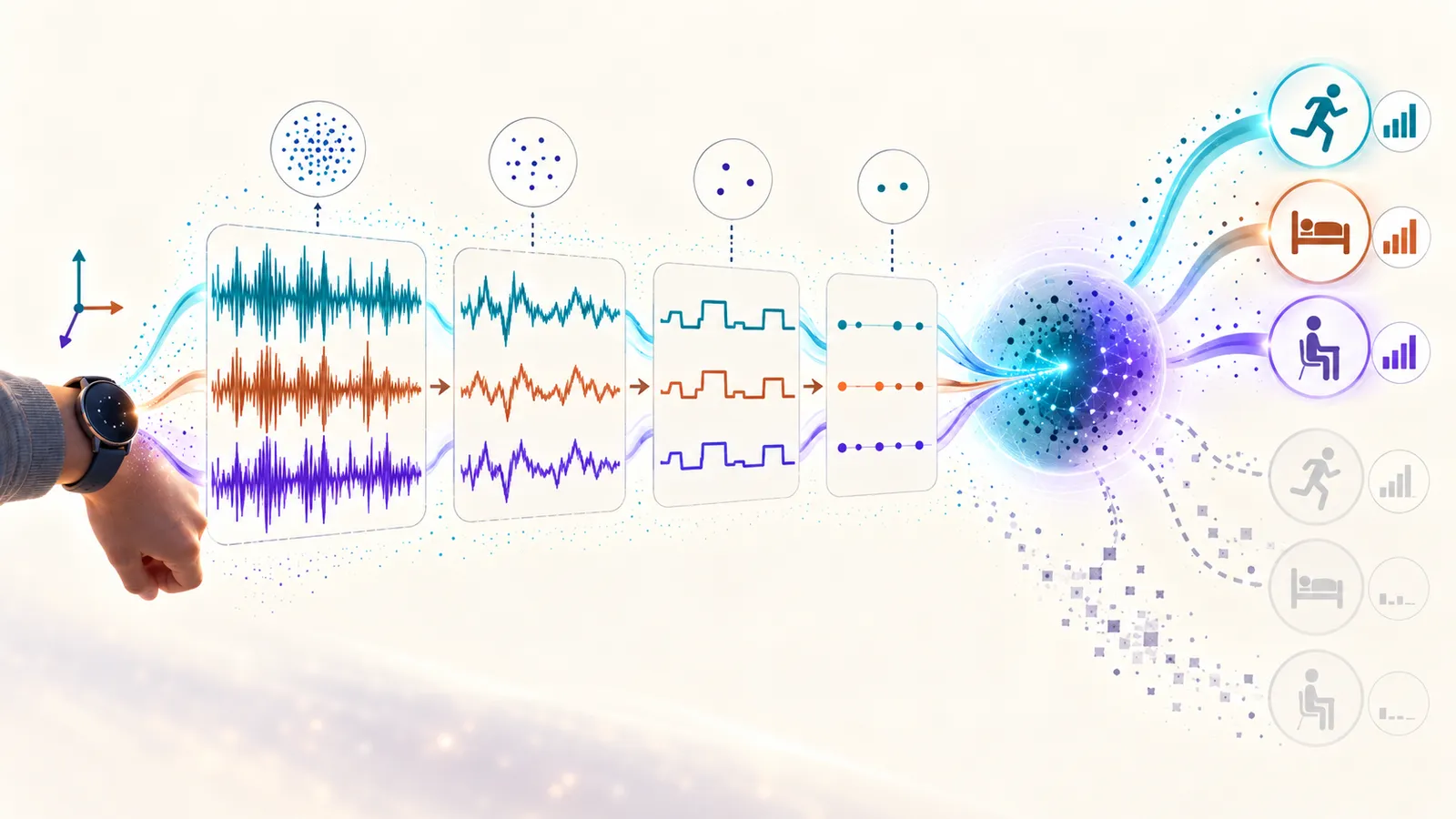
Understanding the Signal Requirements of Wrist Accelerometry Foundation Models
Systematically degrade the input to pretrained wrist-accelerometry models — bandwidth, temporal and amplitude resolution, sensor axes — to measure how much signal is actually needed before behaviours and physiological properties can no longer be recovered.
Full description
Foundation models for wrist accelerometry are typically trained using raw multi-axis signals sampled at relatively high temporal resolution. However, it is unclear which parts of the raw signal are actually required by these models, which information is redundant, and how rapidly learned representations deteriorate as signal quality is reduced. Understanding these requirements is important both for interpreting what the models have learned and for determining the sensor specifications needed for future wearable applications.
In this project, the student will perform a systematic signal-ablation and information-degradation analysis of existing pretrained wrist accelerometry models. The model input format will remain unchanged, while controlled transformations will progressively remove information from the original recording. This can include controlled reductions in signal bandwidth, temporal resolution, amplitude resolution, or available sensor axes while preserving the input format required by the pretrained model. Suitable open accelerometry datasets with behavioural or physiological targets will be used, with the specific datasets selected according to the downstream experiments.
The analysis will characterize the models at several levels. Changes in the raw signal can be related to changes in the learned representation, performance on downstream tasks, and sensitivity of individual representation dimensions. This can produce quantitative information-performance curves describing how much signal resolution is required before particular behaviours or physiological properties can no longer be recovered.
The project provides hands-on experience with digital signal processing, spectral analysis, deep-learning representations, controlled ablation studies, and the experimental characterization of wearable foundation models.
Required qualifications
The student should have a background in biomedical engineering, computer science, signal processing, or related disciplines, with prior experience in Python programming. Experience with machine learning is expected; familiarity with digital filtering is an advantage.
Supervisors
- Andreas Brink-Kjær — Assistant Professor, DTU Health Tech
Getting in touch
Email [email protected] with a short note on which project or theme interests you and why, a CV, and your transcript. If you already have a project idea, include it.
The projects above are concrete starting points, not the only options — scope can be adjusted to your background.