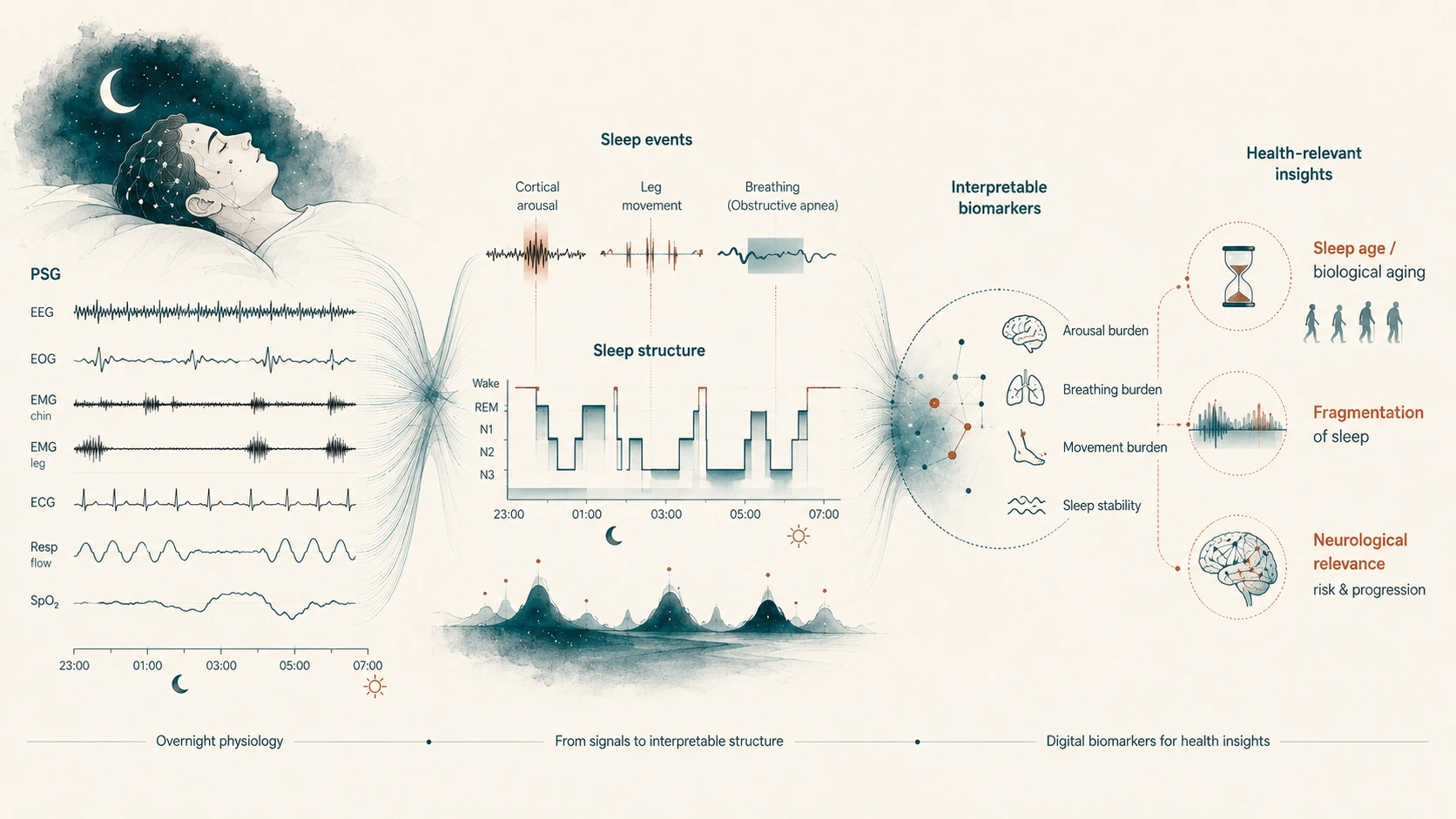
A clinical sleep study records a handful of physiological channels across a full night, and almost all of that signal is discarded once a technologist has scored it into thirty-second stages. This theme treats the recording itself as the measurement — asking what a night of physiology says about a person’s brain, breathing, and health.
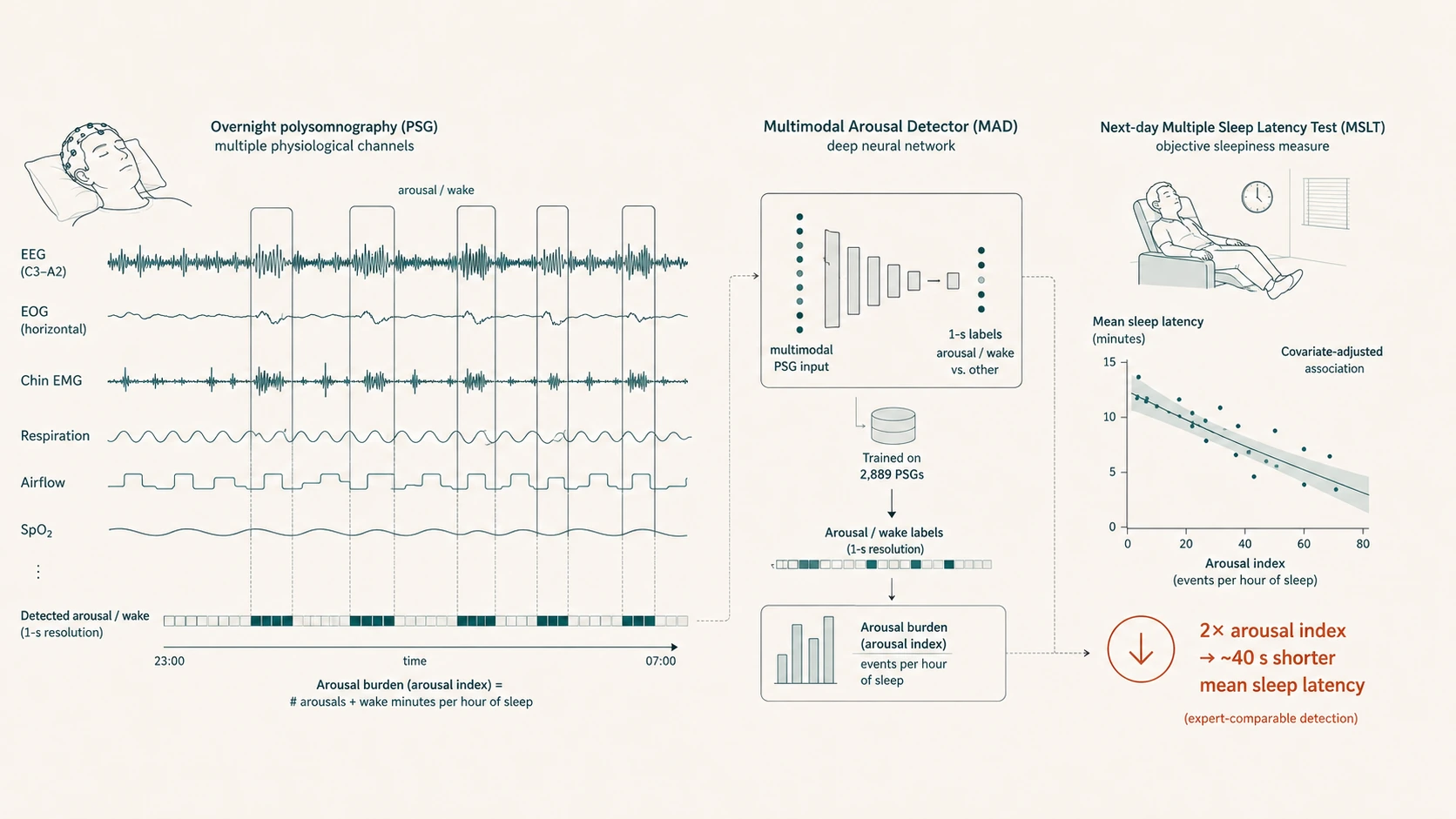
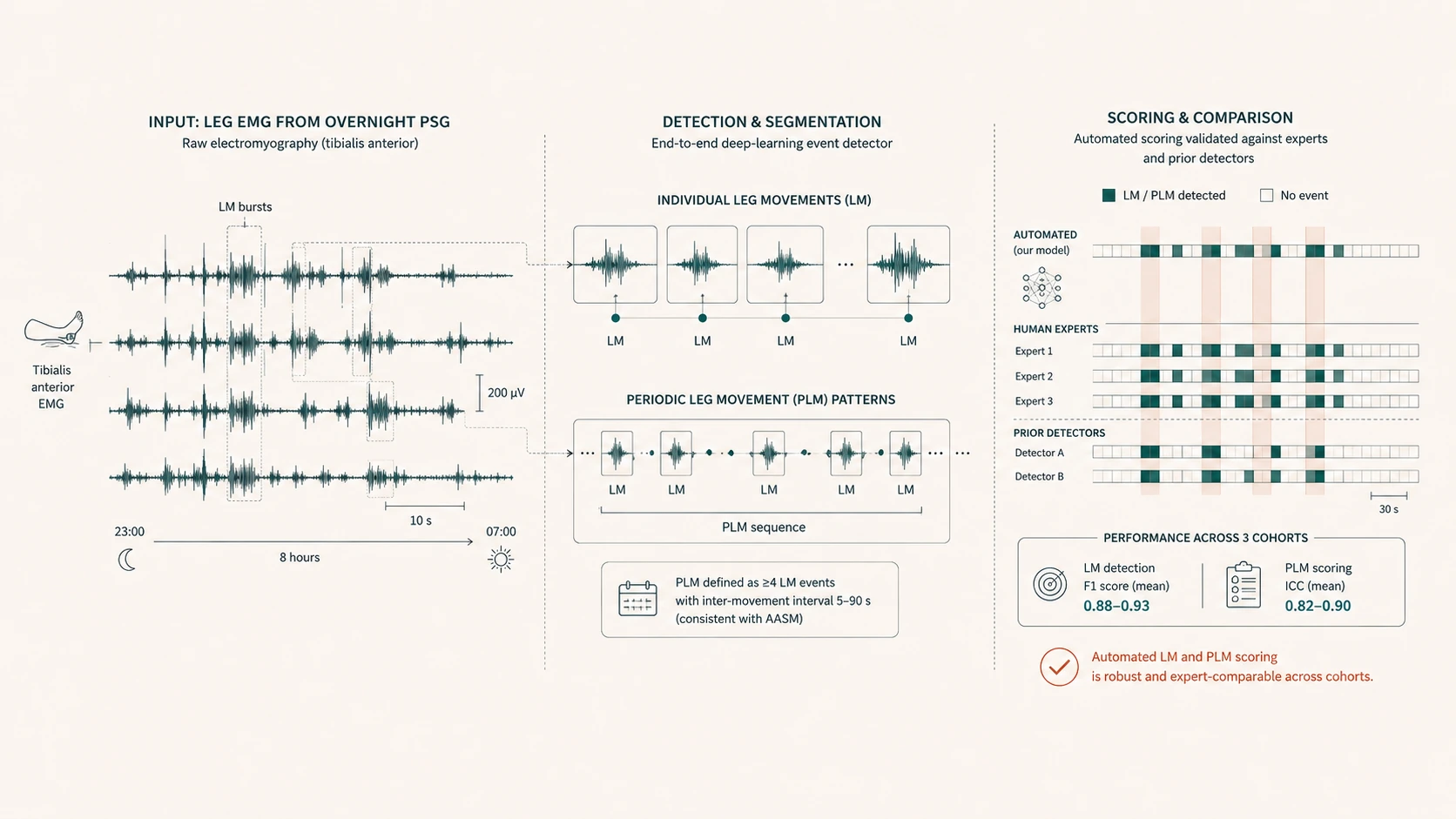
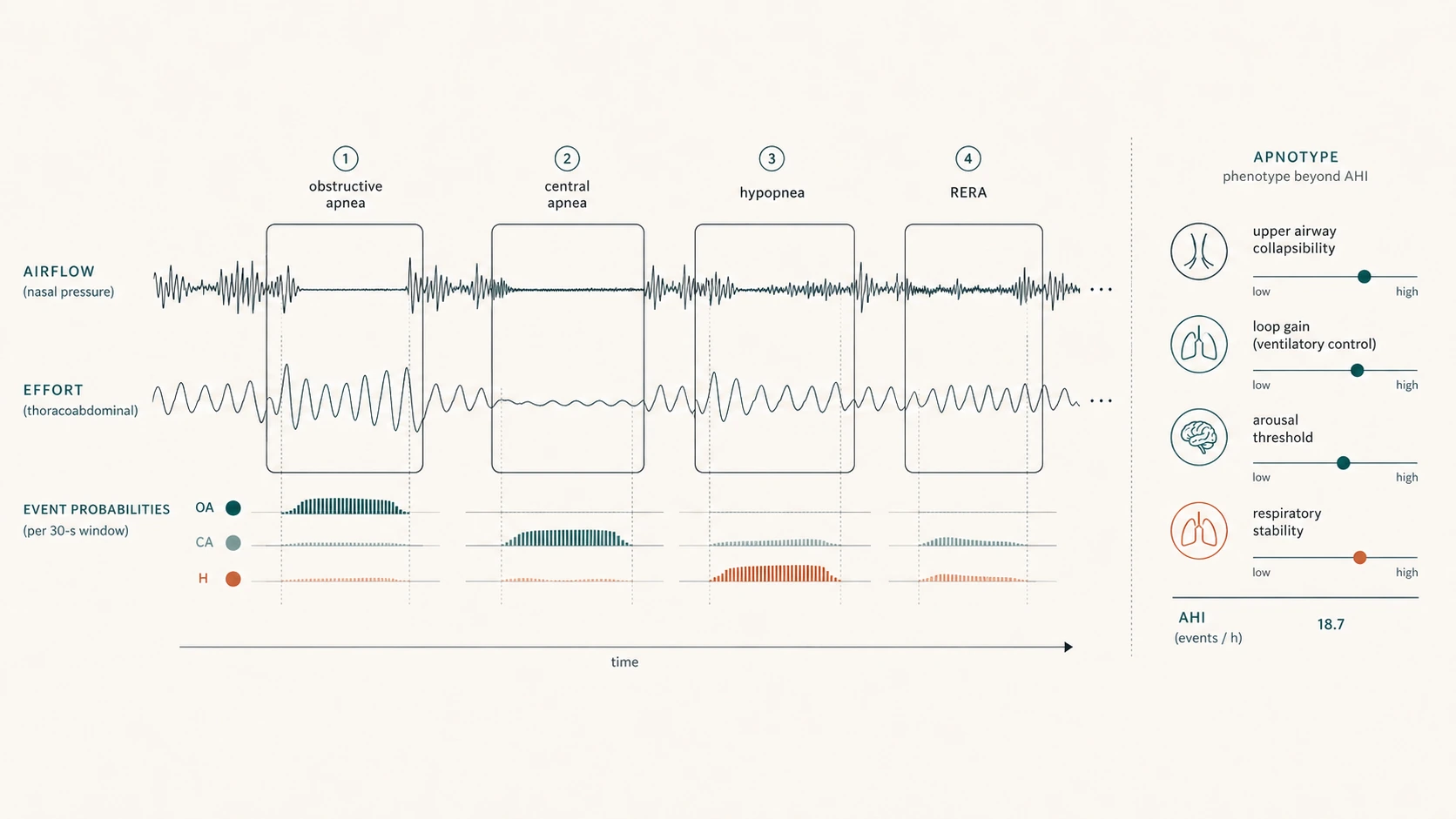
Automated sleep event detection. The scoring layer a sleep study depends on: cortical arousals and their contribution to daytime sleepiness, periodic and non-periodic leg movements validated against multiple human experts, and expert-level probabilistic detection of breathing events for apnea phenotyping — each replacing an annotation a technologist would otherwise make by hand.
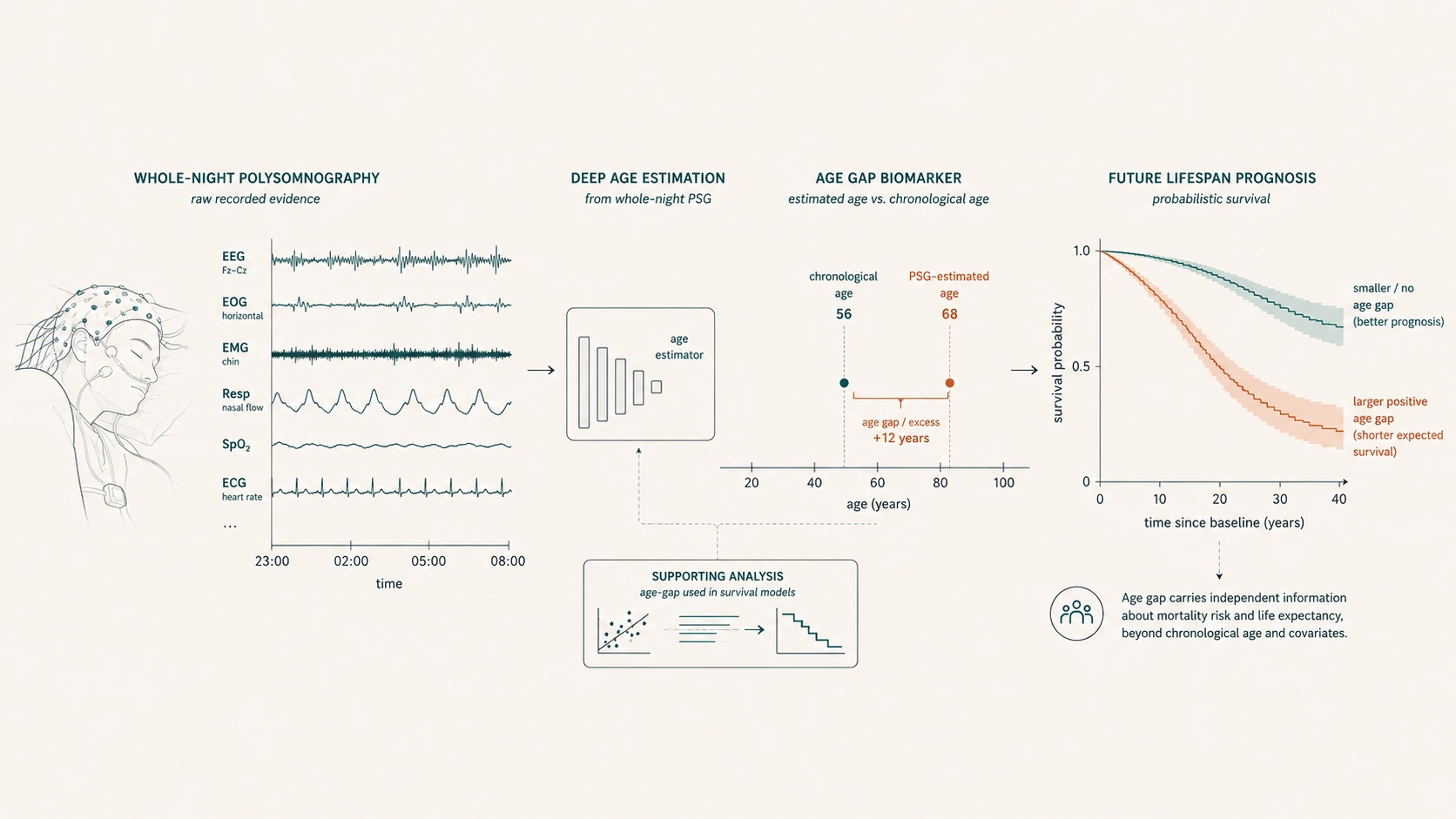
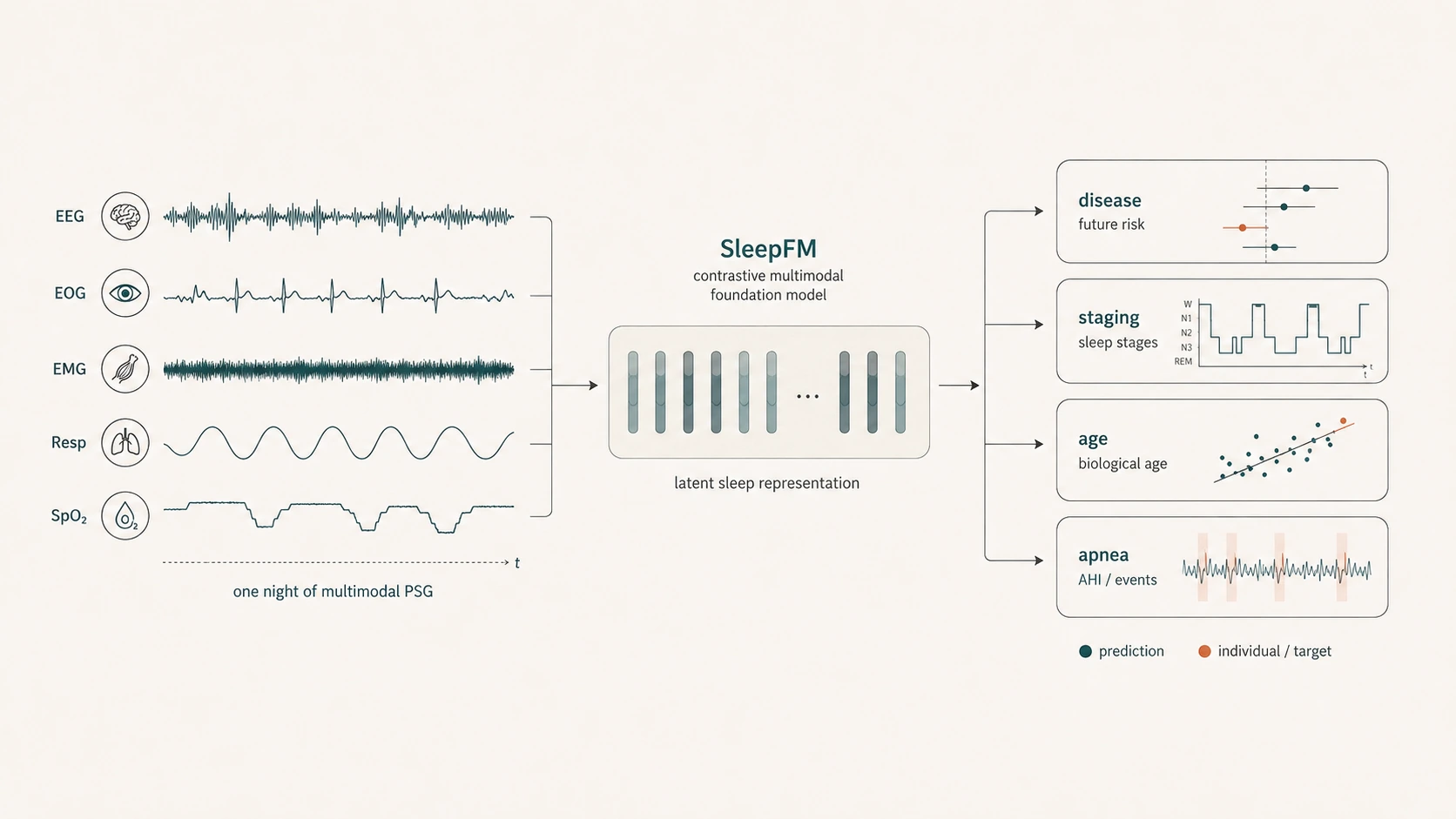
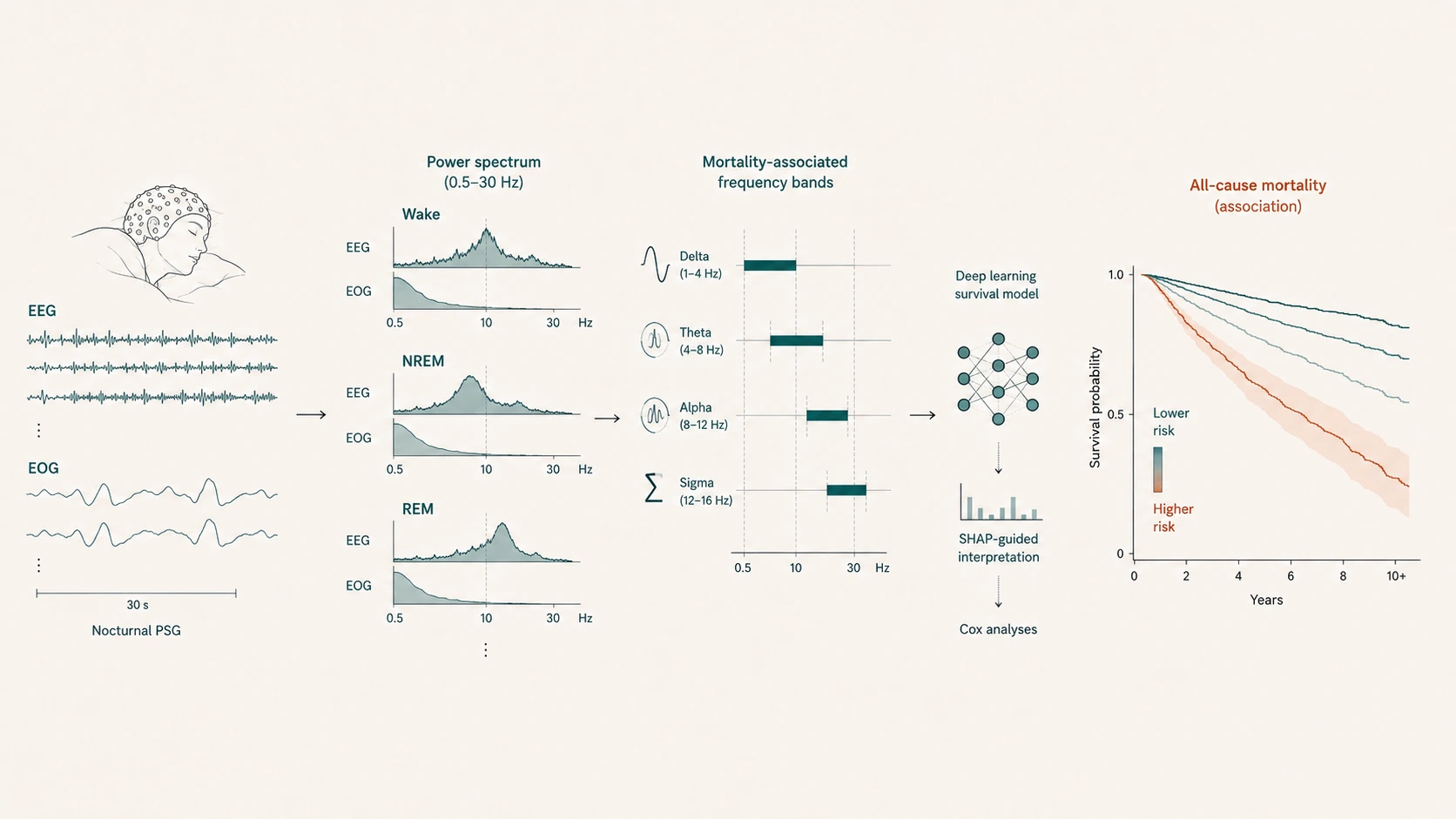
Whole-night biomarkers and phenotyping. Beyond individual events, summary measures of a full recording: sleep age estimated from polysomnography, where the gap to chronological age predicts mortality, mortality risk from the frequency content of EEG and EOG, and a multimodal sleep foundation model for disease prediction — see also Foundation models for physiological signals.